Sealant cracks
Lap sealant shrinks and checks under UV. Most owners end up re-caulking the same joints every season.
Spray-applied polyurea RV roofs
A certified applicator sprays one seamless polyurea membrane over your existing roof, about 120 mils thick, wrapped over the edges and around every vent. No laps. No sealant beads left to crack.
Free and no obligation Takes about a minute
What are you protecting?
Pick one to start your quote.
The problem
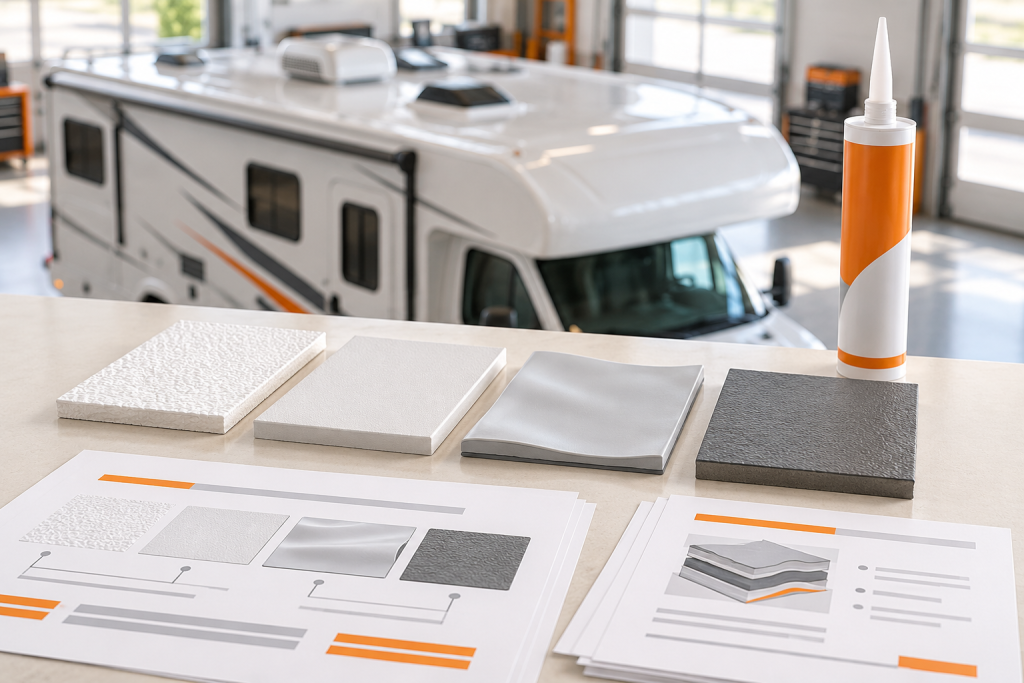
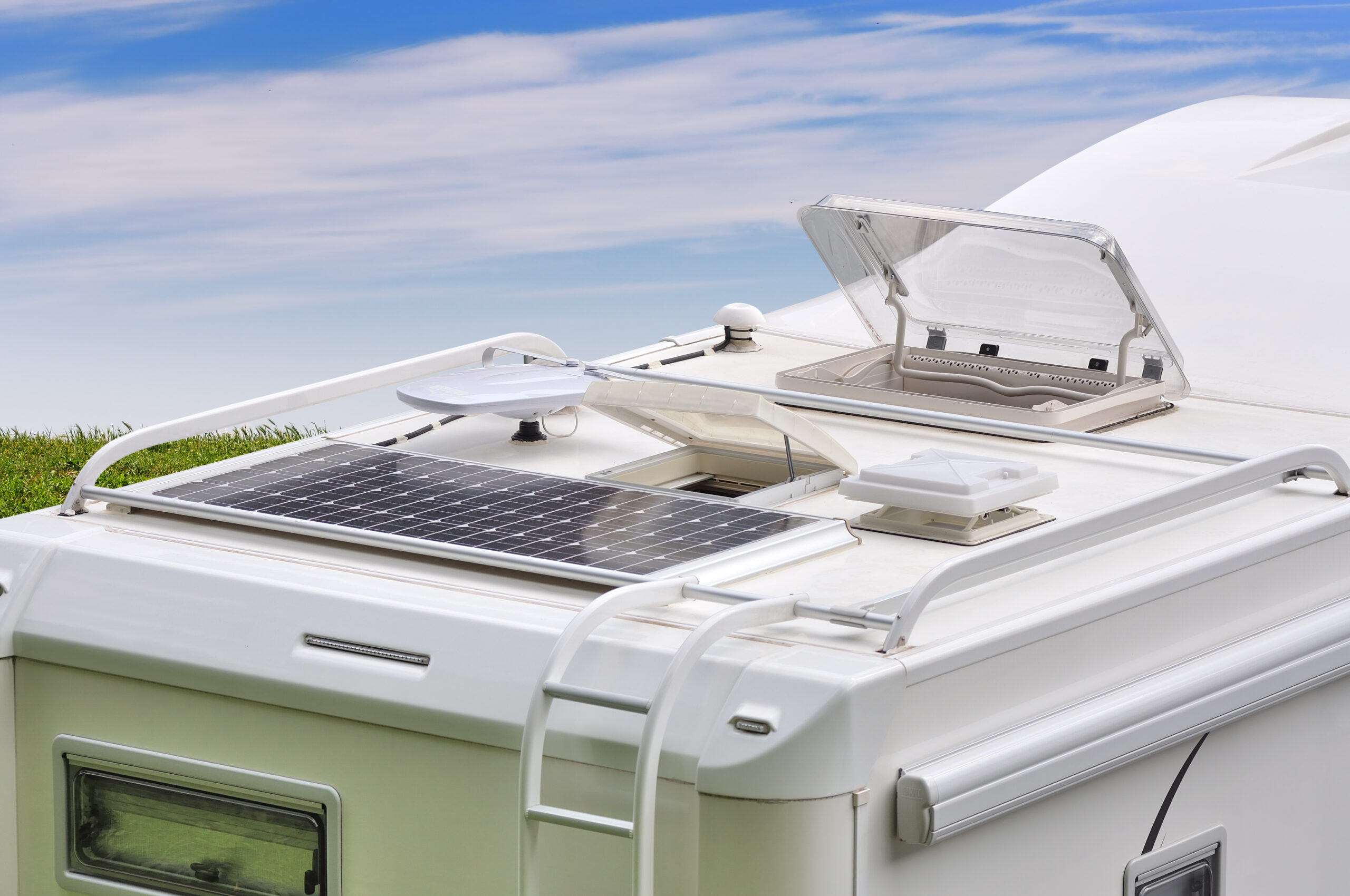
Factory RV roofs are sheets of rubber, TPO, fiberglass or aluminum, held together by sealant around every vent, skylight, antenna and edge. Sun and road flex dry that sealant out. It cracks, and water gets into the roof deck and walls long before you see a stain on the ceiling.
Lap sealant shrinks and checks under UV. Most owners end up re-caulking the same joints every season.
Rubber roofs chalk, thin out and tear. Branches, hail and foot traffic finish the job.
By the time a soft spot or ceiling stain shows up, the decking and framing underneath are already wet.
The fix
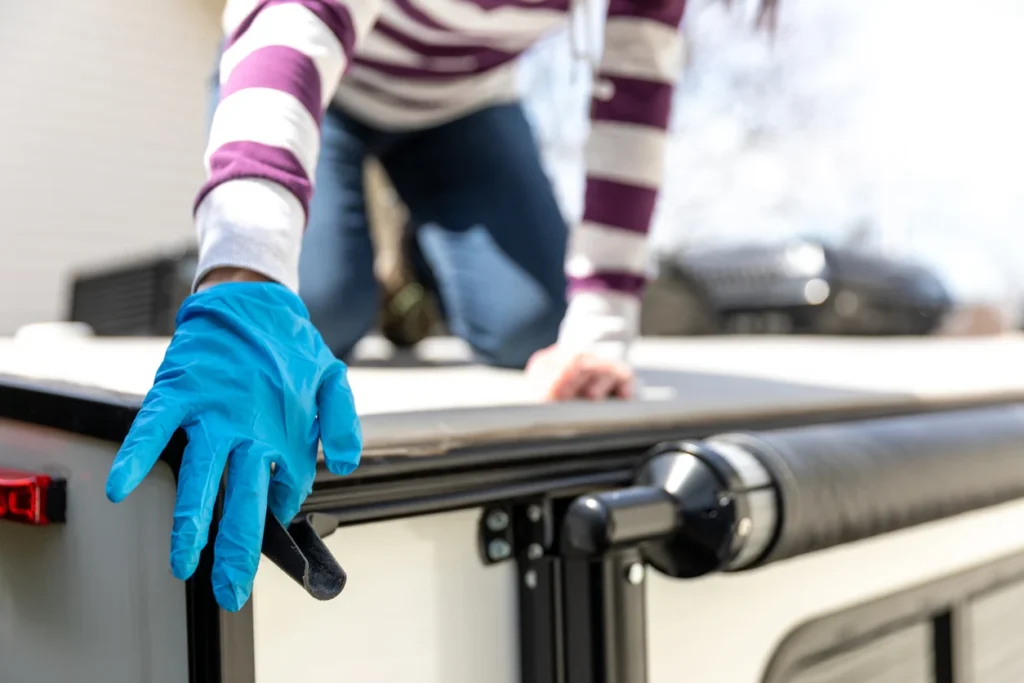
Polyurea is sprayed on as a liquid and sets in seconds to minutes into a tough, flexible membrane that bonds to the roof underneath. Instead of patching seams, you get rid of them.
Size up your roof
Slide to your RV's body length. Measure the box, not the brochure: a trailer's advertised length includes the tongue.
How it works
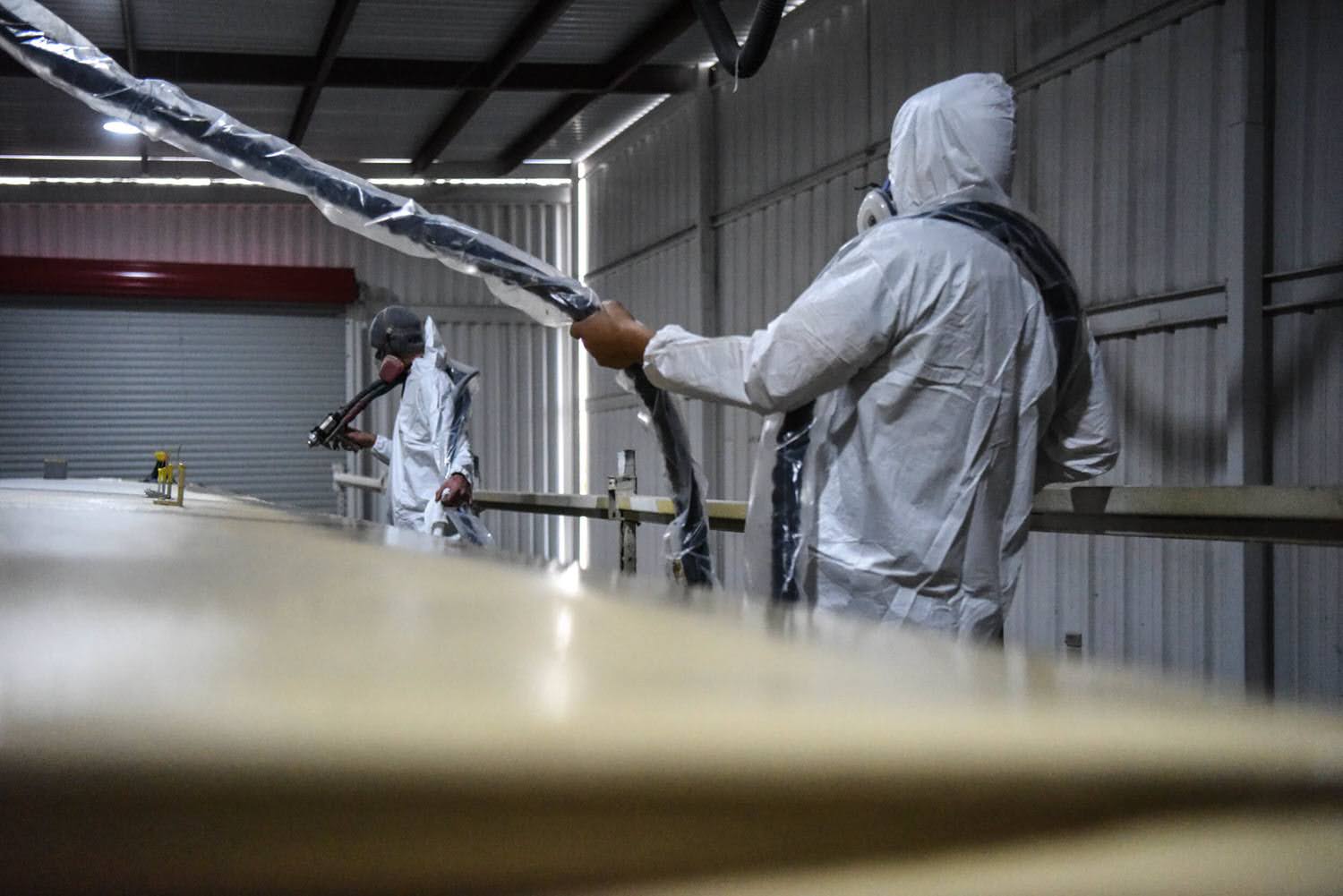
Your applicator looks over the roof, notes soft spots, solar, vents and anything that needs repair, then gives you a written quote.
Failing sealant and loose material come off, the surface is cleaned and abraded, and everything that shouldn't be coated is masked.
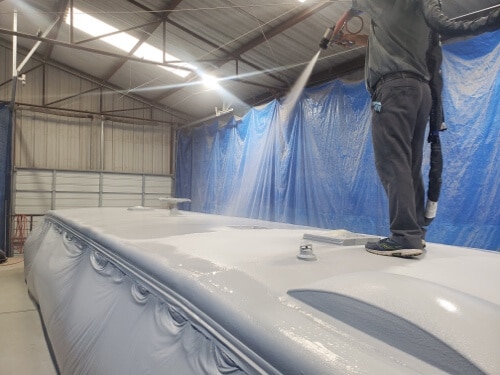
The polyurea basecoat goes on at about 120 mils, wrapping over the edges and sealing around every penetration in the same pass.
A UV-stable topcoat goes over the basecoat, or a single aliphatic coat does both jobs. Then you drive home.
Roof systems
Both are ArmorThane systems sprayed by certified applicators. Your installer will recommend the one that fits your roof, your climate and how you travel.
A tough polyurea basecoat builds the thickness and grip, then ArmorDeck Topcoat locks in UV protection and color. ArmorDeck Topcoat MAX is tack-free in about an hour, so the whole roof can be finished in a day.
An aliphatic polyurea that holds up in direct sun on its own, so it's sprayed as a complete roof with no topcoat over it. One product, one pass of chemistry, full build.
Compare
| Feature | Sprayed polyurea | Roll-on coating | New rubber or TPO roof |
|---|---|---|---|
| Seams after the job | None, one continuous membrane | Coats over the existing seams | Laps and sealant at every fixture |
| Thickness | About 120 mils in one system | Thin film built up coat by coat | Sheet thickness only |
| Edges and penetrations | Sprayed and sealed in the same pass | Only as good as the brush work | Separate caulking to maintain |
| Ongoing upkeep | Routine inspection | Recoat as it wears | Regular sealant checks and touch-ups |
| Time out of service | Usually about a day | A DIY weekend plus cure time | Often days in a shop |
The finish
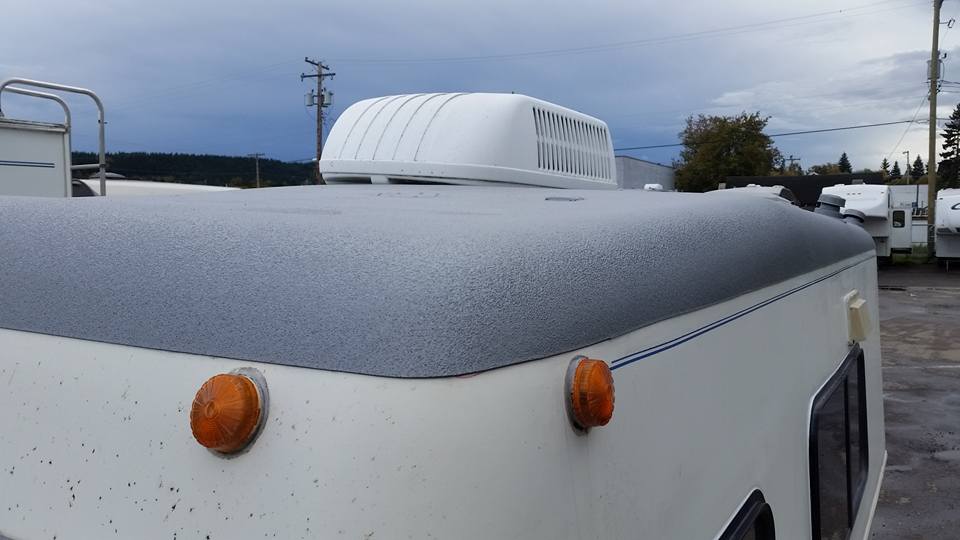
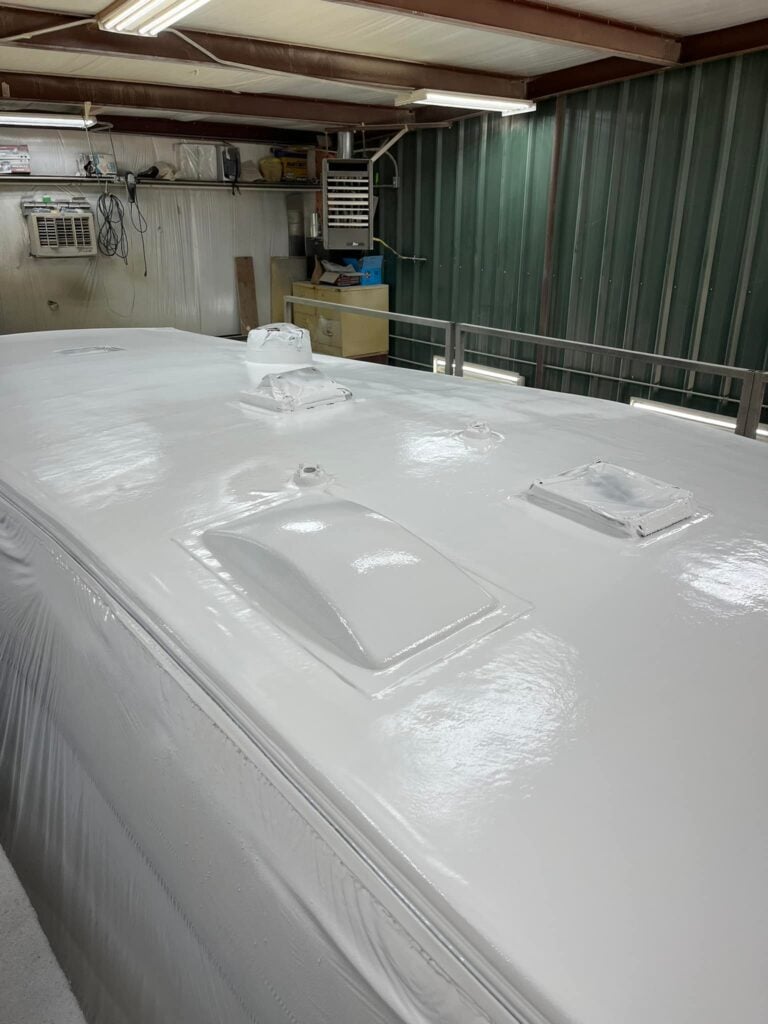
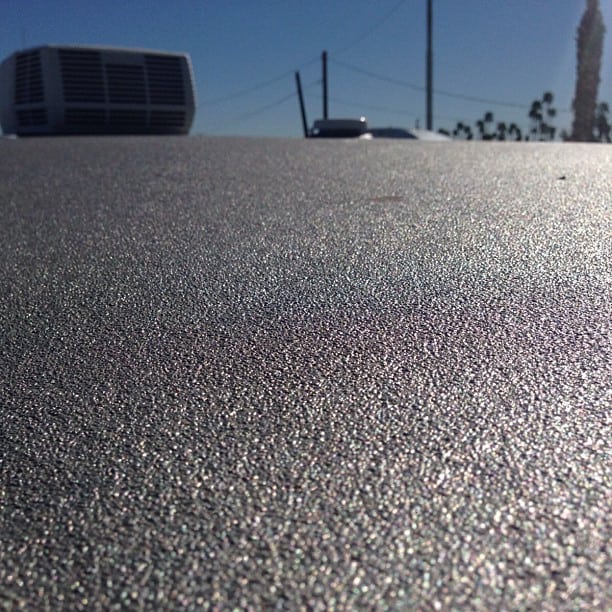
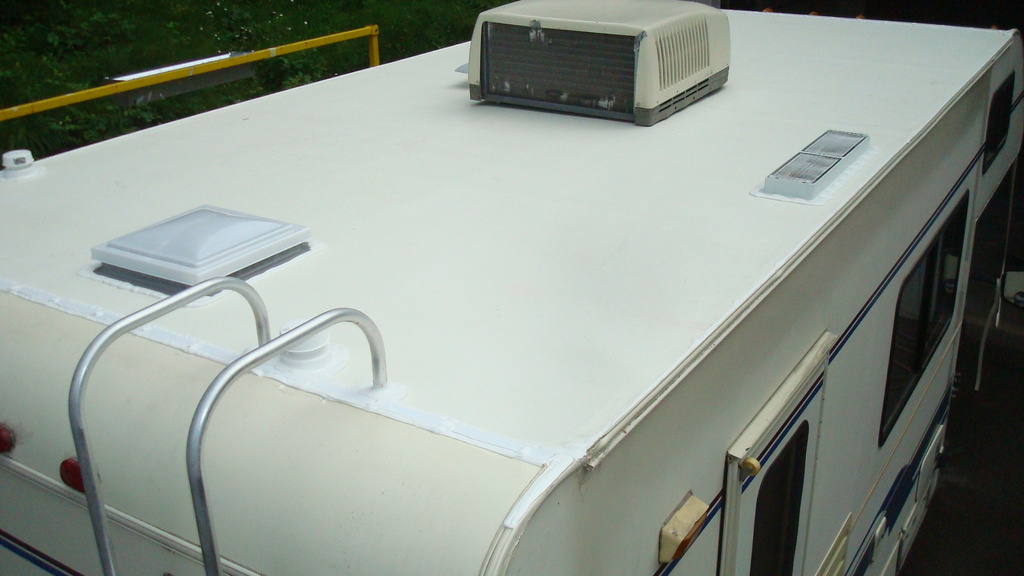
Polyurea rounds over the roof edges, climbs up around fixtures and leaves a uniform, walkable surface from end to end.
 RV owners
Get your roof done right, once.
Tell us about your rig and we'll connect you with a certified polyurea applicator who serves your area.
Get my free quote
Contractors and shops
Turn RV roofs into a business.
Low-pressure spray equipment, hands-on training, proven roof systems and local leads sent straight to you. No franchise fees. No royalties.
Explore the applicator program
RV owners
Get your roof done right, once.
Tell us about your rig and we'll connect you with a certified polyurea applicator who serves your area.
Get my free quote
Contractors and shops
Turn RV roofs into a business.
Low-pressure spray equipment, hands-on training, proven roof systems and local leads sent straight to you. No franchise fees. No royalties.
Explore the applicator program
Free quote
A few quick questions and you're done. We'll match you with a certified applicator near you and get you a real number for your rig.
Step 1 of 4
We've got your details and will connect you with a certified applicator who serves your area.
Most roofs are prepped, sprayed and topcoated in about a day, depending on the rig's size, the condition of the existing roof and the weather. Fast-tack topcoats like ArmorDeck Topcoat MAX are tack-free in roughly an hour, which is what makes a same-day finish realistic.
In most cases, yes. The applicator inspects the roof first. Loose, failing or soft areas are repaired, old sealant that is coming apart is removed, and the surface is cleaned and prepped so the polyurea bonds to it.
RV roofs are sprayed to about 120 mils of basecoat, which is roughly an eighth of an inch. Thin 30 to 40 mil coats are not enough for a roof that lives in the sun and flexes down the highway.
Fixtures are masked and the membrane is sprayed up around their bases, so the joints where most RV roof leaks start are sealed in the same pass as the rest of the roof.
Yes. Cured polyurea is a tough, walkable surface, and textured finishes add grip. Use the same care you would on any RV roof: good ladder, dry surface, no stepping on vents or skylights.
It depends on the length of the rig, the condition of the roof, how much prep is needed and which system you choose, so we do not publish a flat price. Tell us about your RV and you will get a real quote from a local applicator.
Each certified installer warranties their own work, and the coating systems come from ArmorThane, which has manufactured polyurea since 1989. Ask your applicator to walk you through their warranty when you get your quote.
Use the applicator option on the quote form or visit the applicator page. We will walk you through the equipment packages, training and how ArmorThane sends local RV roof leads to its applicators.
From the blog